Antoinette Poisson wallpapers — French artisanal poetry on the wall
There are materials that instantly change the atmosphere of a room — not by excess, but by quiet presence.
These wallpapers by Antoinette Poisson belong to that rare category: handmade, historical, and deeply rooted in French decorative tradition.
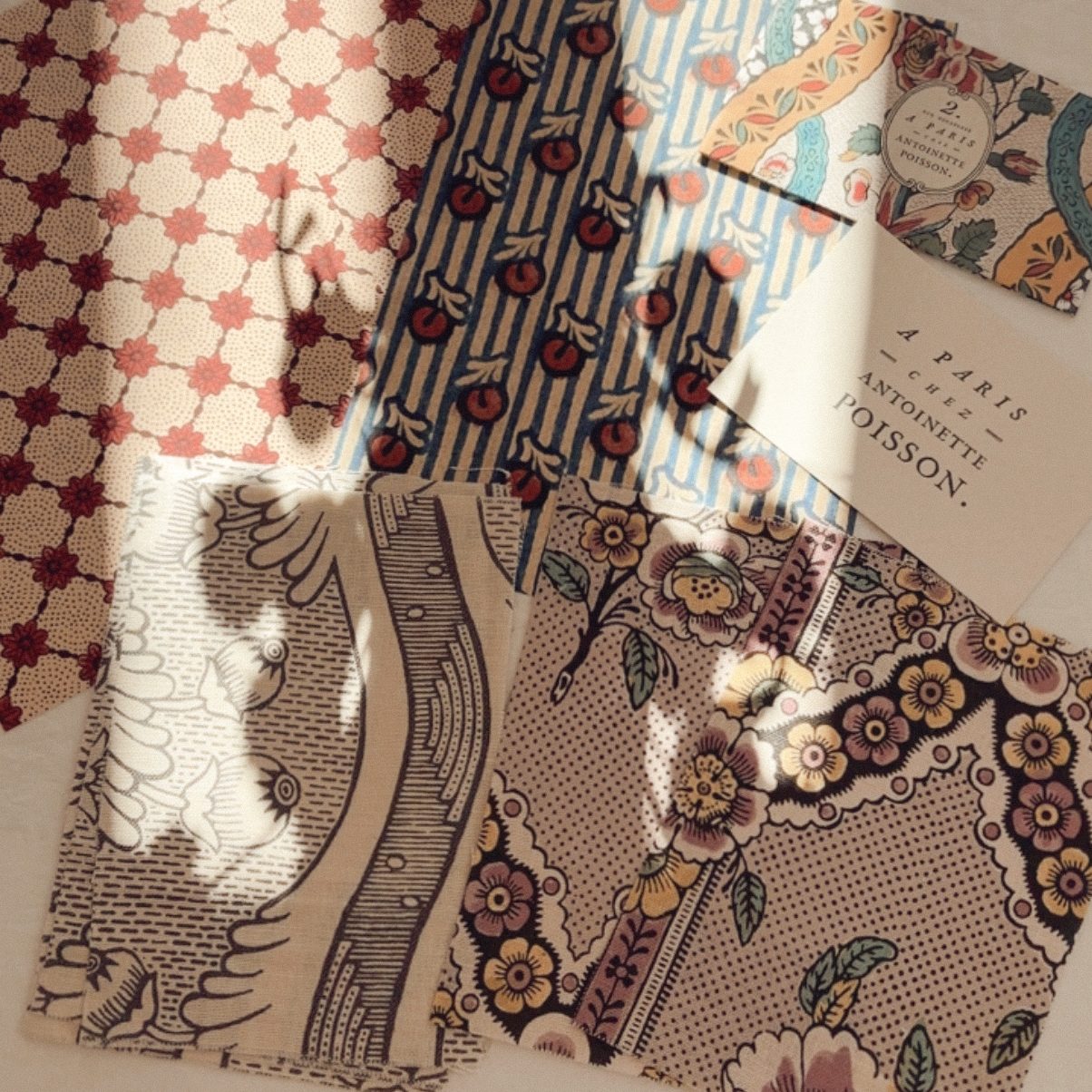
I ordered several samples to explore their textures, colours, and patterns in our home light.
Seeing them here, in the soft winter sun of the South of France, felt like bringing a fragment of 18th-century Paris into a contemporary family interior.
The poetry of French domino paper

Antoinette Poisson revives an almost forgotten decorative art: papier dominoté — small patterned sheets traditionally printed with woodblocks and hand-coloured using stencils.
These papers were widely used in the 18th century to line furniture, trunks, books, and walls.
Their charm lies in their scale: intimate, rhythmic, and delicate — decorative without overwhelming a space.
Today, the Parisian atelier recreates these papers using the same artisanal processes, making each pattern subtly irregular, alive, and tactile.
Their work is not reproduction — it is continuation.
A living heritage, reintroduced into modern interiors.
A French decorative house rooted in history


The name Antoinette Poisson refers to Jeanne-Antoinette Poisson, better known as Madame de Pompadour — a great patron of the arts and decoration in 18th-century France.
Founded in Paris in 2012 by three paper conservators, the atelier began by recreating historical domino papers for restoration projects.
The result was so compelling that they decided to bring these patterns back into contemporary decoration.
All papers are still produced using traditional block printing and stencil colouring — techniques abandoned after industrialisation.
This dedication to slow craft explains their unique depth of colour and texture — impossible to replicate digitally.
Seeing the patterns at home

What surprised me most when placing the samples in our home was how they interact with light.
Under southern daylight, the pigments soften.
Edges blur slightly.
The patterns feel less graphic, more atmospheric.
Rather than reading as “wallpaper”, they behave like textiles or antique fragments — something collected, layered, and lived with.
This quality makes them especially suited to quiet, poetic interiors:
children’s rooms, reading corners, bedside walls, small framed panels.
How I would use them

Instead of covering entire walls, I’m drawn to more intimate uses:
– framed wallpaper panels
– small wall compositions
– lining shelves or drawers
– inside furniture backs
– decorative inserts within mouldings
These approaches preserve the preciousness of the material while keeping spaces light and contemporary.
Materials, colour and French light
What makes these papers particularly beautiful in our home is the dialogue between:
– natural pigments
– aged tones
– textured paper
– warm southern light
The result feels neither antique nor modern — simply timeless.
A quiet French decorative language that sits effortlessly within everyday family life.
Exploring these Antoinette Poisson samples reminded me that decoration does not need scale to create atmosphere.
Sometimes, a fragment is enough.
A pattern.
A colour.
A piece of paper carrying centuries of craft.
Leave a Reply